

Fast Delivery
Quick, reliable shipping to any location.

Free & easy returns
Return this item by mail or in store within 90 days for a full refund.
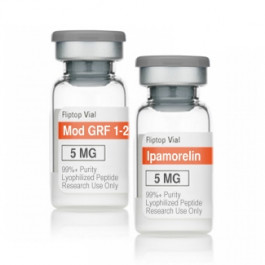
buy Ipamorelin 5mg & Mod GRF 1-29 Peptide
Ipamorelin 5mg is a synthetic peptide that is composed of five amino acids, otherwise known as a pentadecapeptide (Aib-His-D-2-Nal-D-Phe-Lys-NH2), formally classified as a Growth Hormone Secretagogue (GHS). Its name is derived from the intention of its development. Ipamorelin peptide was designed to act via ghrelin receptor binding. The ghrelin receptors on the pituitary gland (the gland naturally involved with growth hormone, or hGH synthesis) are also known as Growth Hormone Secretagogue receptors (GHS-R). Through its implied action, Ipamorelin may host the potential to trigger the GHS-Rs on the pituitary gland and potentially stimulate the release of growth hormone.(1)
Overview
Ipamorelin is the first synthetic GHS that appears highly selective and may have the potential to augment the production of hGH without affecting other pituitary hormones such as prolactin or adrenocorticotropic hormone (ACTH). The potential increase in hGH might promote lipolysis and insulin-like growth factor-1 (IGF-1) production synthesis. Consequently, IGF-1 may become a mediator of hGH’s anabolic actions, and thereby the peptide may act to increase cellular proliferation and bone and muscle anabolism.(1)
Chemical Makeup
Molecular Formula: C38H49N9O5
Molecular Weight: 711.86 g/mol
Other Known Titles: NNC 26-0161
Ipamorelin Peptide and Growth Hormone Synthesis
Studies conducted in vitro suggest that the interaction of Ipamorelin with GHS receptors may potentially affect somatotroph cells in the anterior pituitary gland by triggering a series of cellular signaling events.(3) This theorized pathway involves the activation of phospholipase C (PLC), which some researchers believe may lead to the increased release of inositol triphosphate (IP3) and diacylglycerol (DAG). This release of secondary messenger molecules such as IP3 might potentially stimulate the discharge of calcium ions (Ca2+) from the cell’s internal stores, while DAG might activate protein kinase C (PKC). The subsequent rise in intracellular calcium levels and the possible activation of PKC are thought to result in the exocytosis of vesicles filled with growth hormones from these pituitary cells.(3)


Reviews
There are no reviews yet.